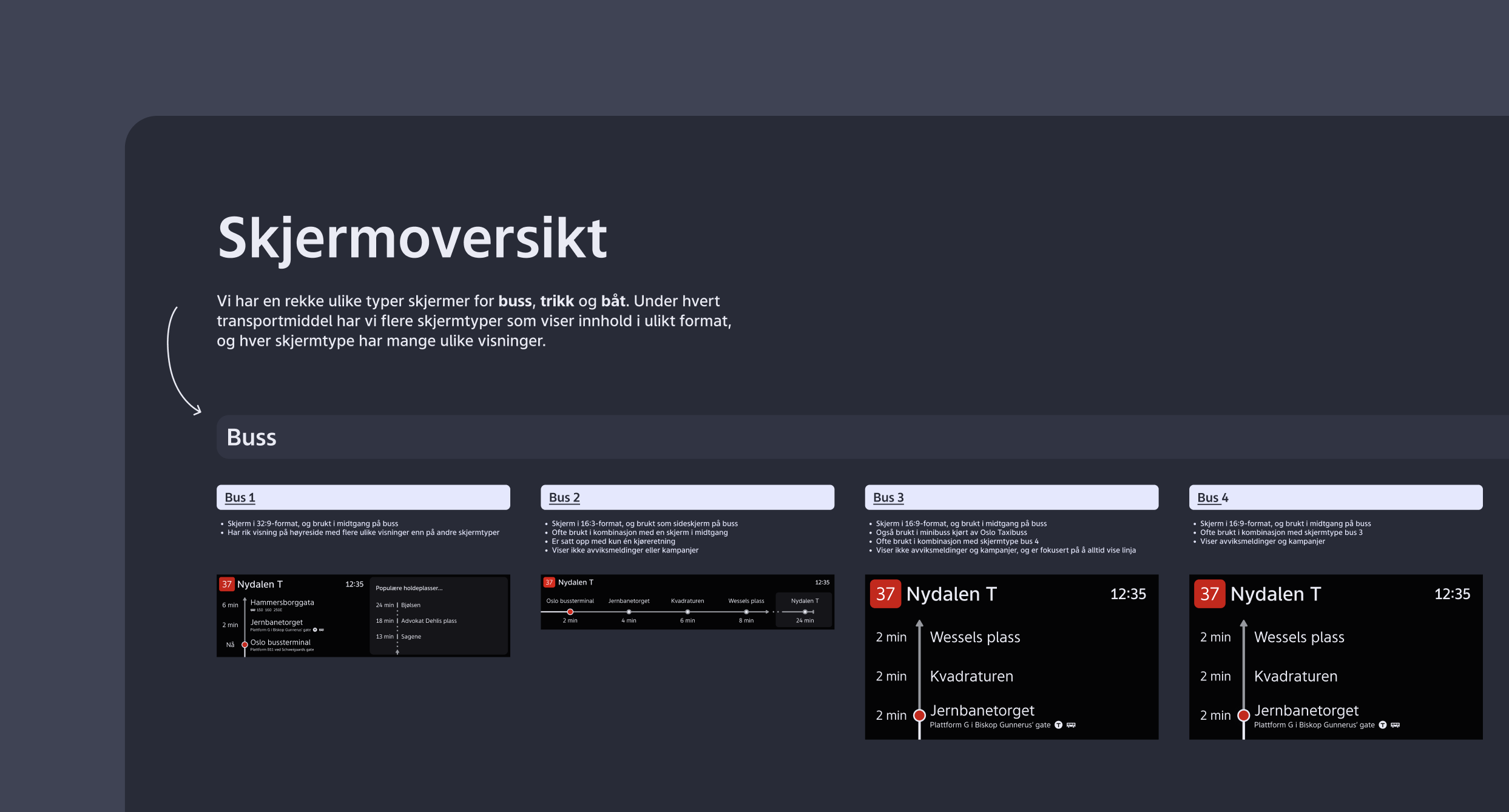
Ruter digital information screens
Providing travellers with real time information about their journey through digital information screens.
Ruter manages the public transport system in Oslo and surrounds. I have been the lead designer as a part of the team responsible for creating and managing the solution for the digital information screens on board vehicles and on the stop places. This includes the external facing views for the travellers as well as internal facing tools for managing and publishing content across screens.
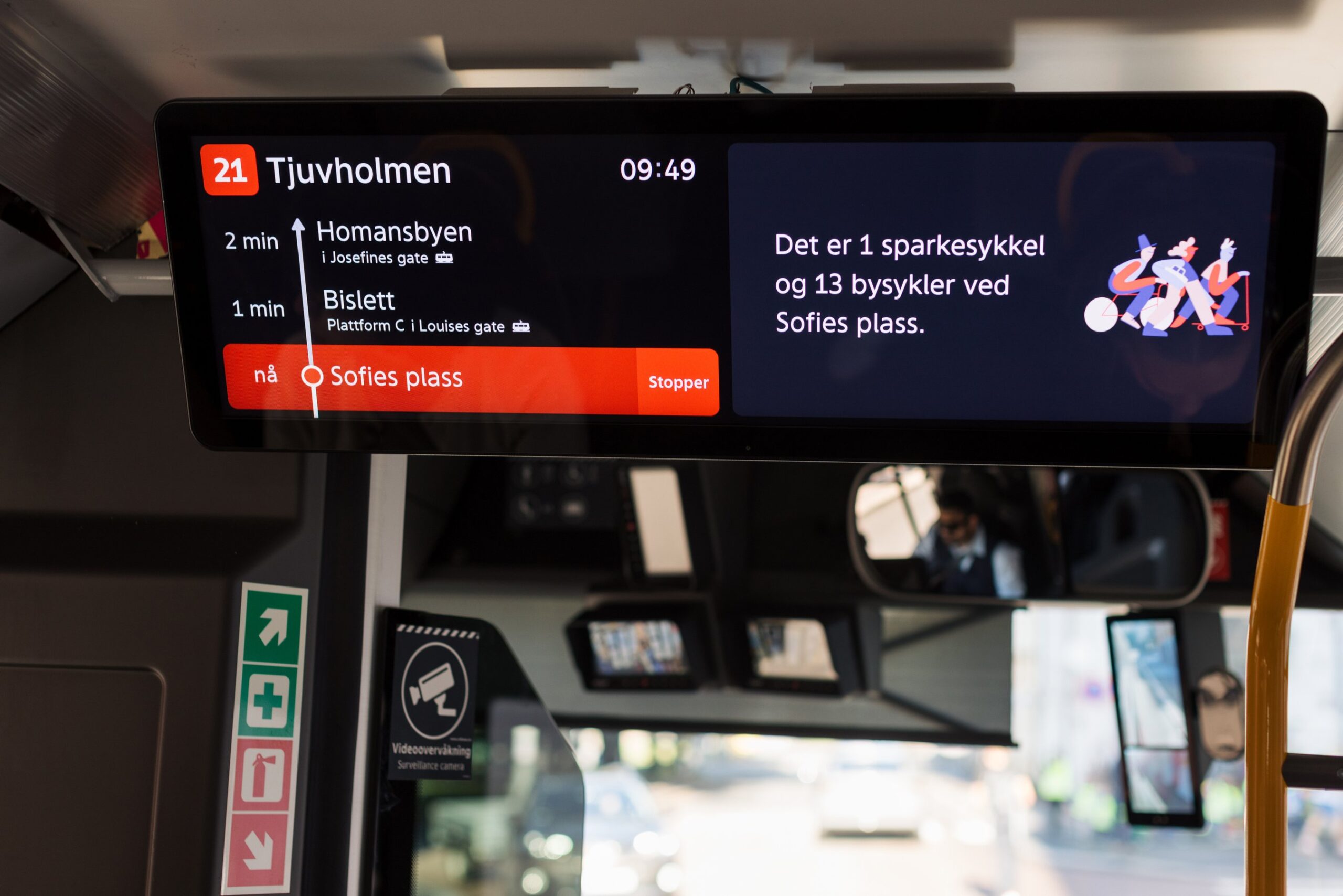
On board
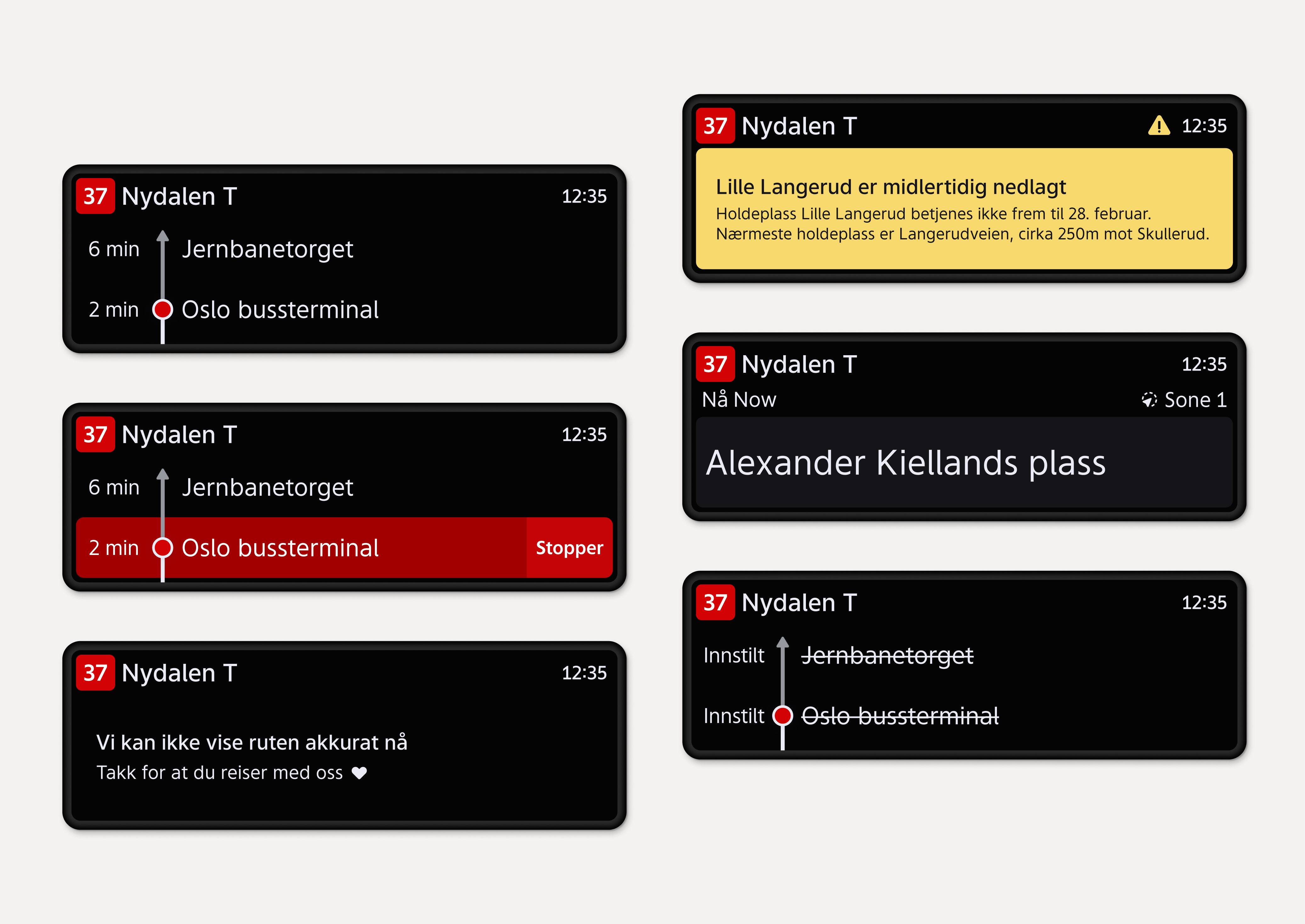
In addition to continuous improvement of existing screens, we had to accommodate for new scenarios, sometimes calling for development of whole new screen types. A situation like this was the introduction of a 29″-screen, which had a new size, aspect ratio and a context different to existing designs.
This would be the only screen on board a new fleet of buses, so a decision was made to prioritise critical information, and define a hierarchy for screen time. Font sizes were adjusted to meet accessibility requirements for legibility from a long distancee
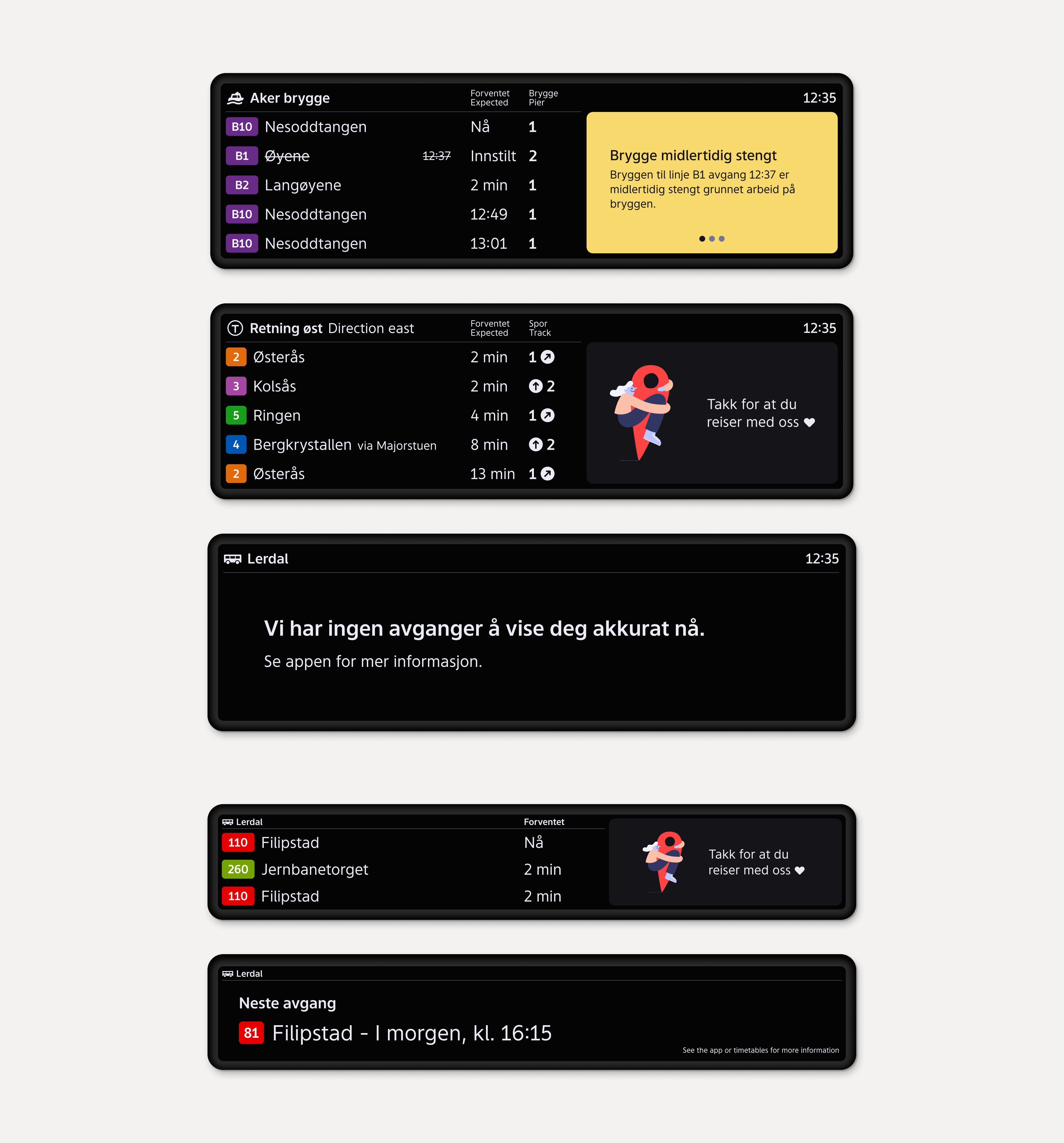
Stopplace
Another set of new screen designs were for stopplaces, when a range of older screens had to be replaced due to the technology being too old. These new screens show upcoming departures, any changes in the traffic and active disruptions. Each screen size is designed to suit the number of lines travelling through the stop places they appear at.
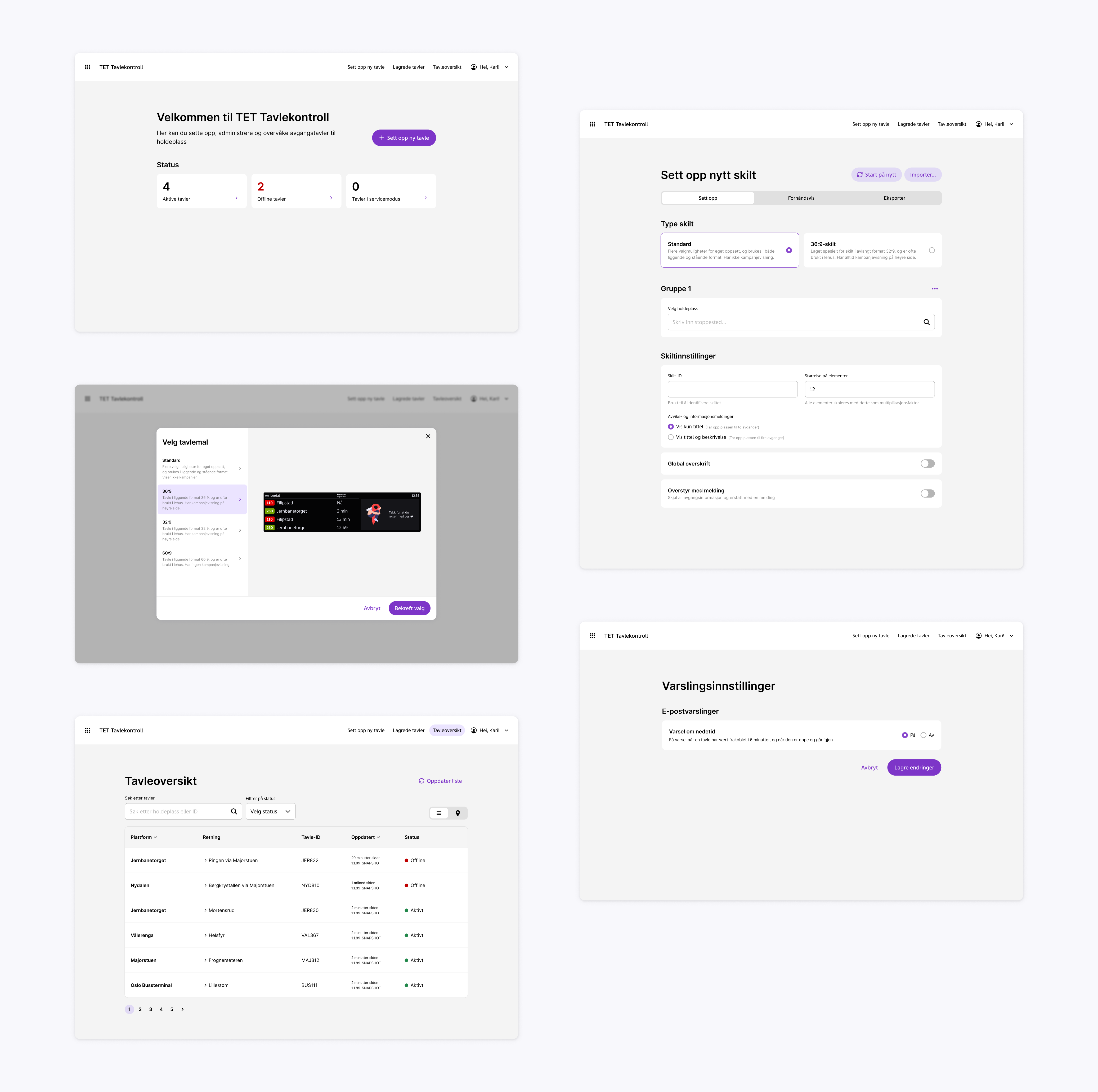
The internal system used to set up these stopplace screens had a redesign to improve usability and making it agnostic for other public transport authorities, enabling scalability to other cities.
Design system
The digital information screens have their own eco system of colours, views and elements, built on global brand rules, but separate from other digital surfaces. Ensuring consistency across screens, I built a design system to help manage and maintain the designs in Figma. As a part of this work, and using the design system elements, I documented all the possible screen types and views to act as the single source of truth for design.