Ruter travel app
Enabling friction-free ticketing in one of Norway’s most used travel apps.
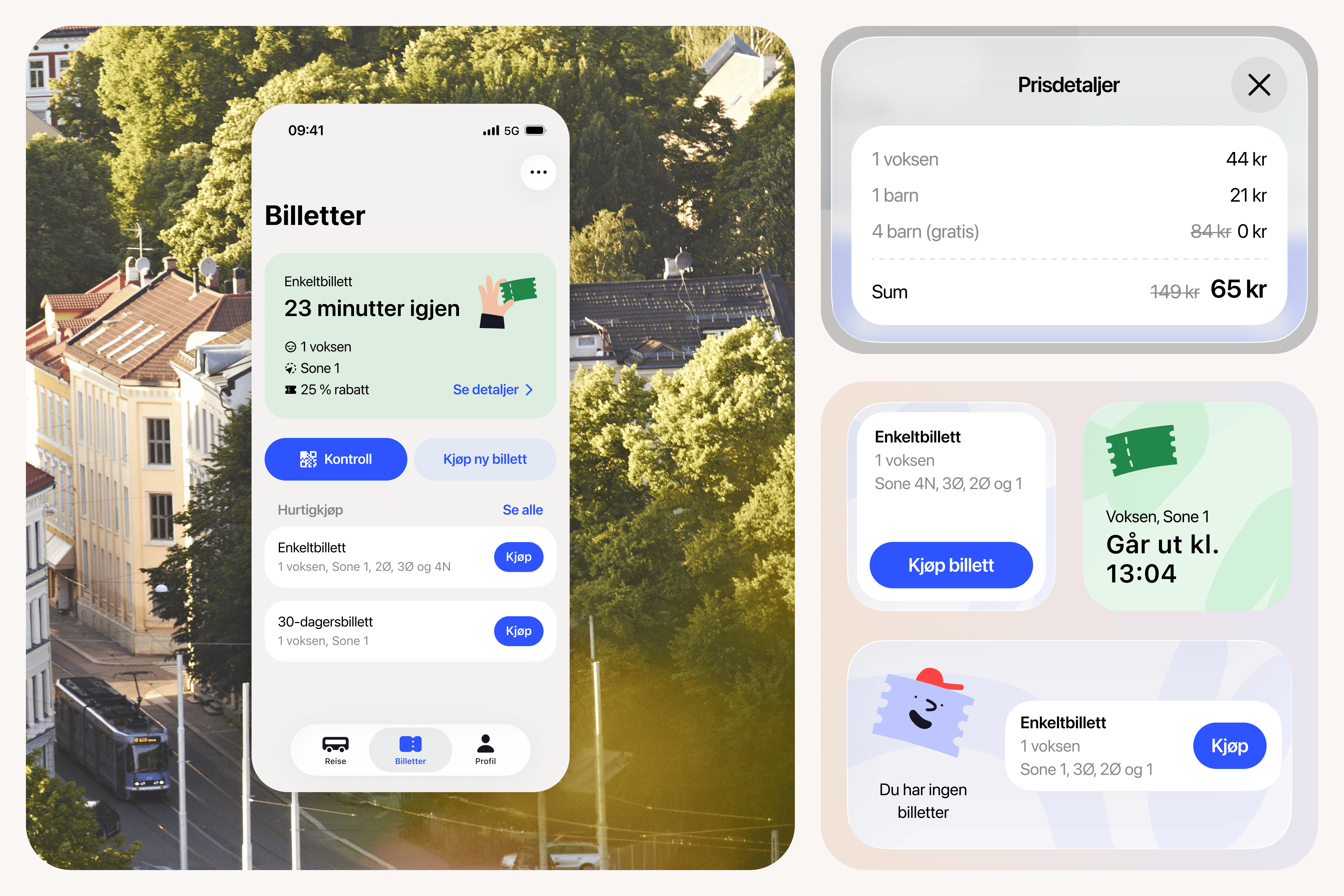
Ruter is responsible for public transport in Oslo and the surrounding region, serving almost 1.5 million people. I worked as a product designer on Ruter’s travel app, a native iOS and Android app that brings journey planning and ticketing together in one place. As part of a multidisciplinary product team, I was responsible for the whole design process, from early ideas to final designs.
Extending the product to other regions
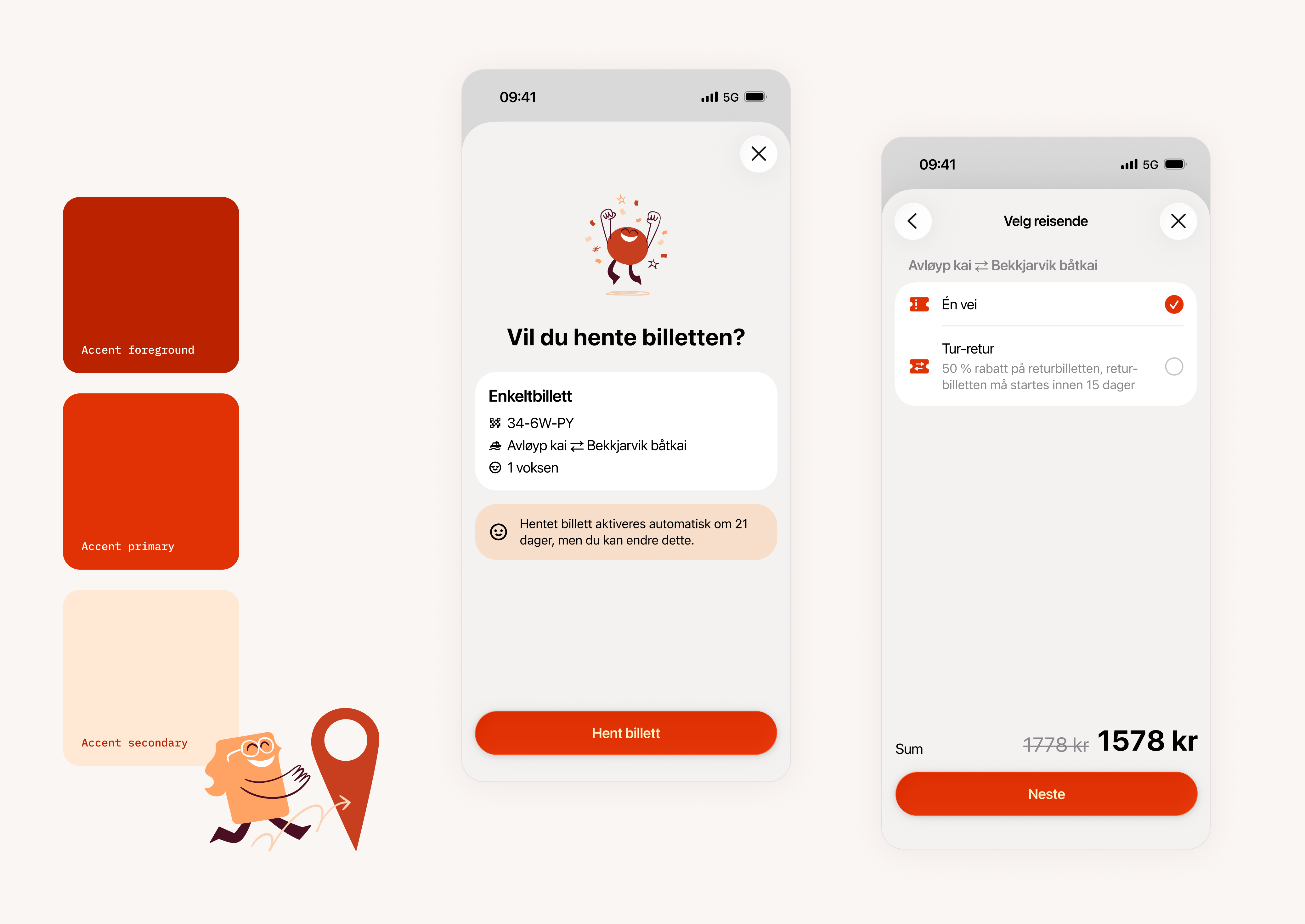
A central part of the strategy was to turn the app into a product that can be adapted to other regions. The first major milestone on this journey was launching the app for Skyss, the public transport authority of Vestland county. My responsibilities included adapting the UI colours to the Skyss brand, as well as UX design for new ticket purchasing flows.
In-app experiments to reduce fare evasion
Fare evasion costs Ruter several million NOK in lost ticket revenue every year. Those who don’t pay range from the politically opposed to people who simply forget. The second group has an intention to pay, but fails due to practical or cognitive barriers.
Efforts in the app were focused on this group. Our hypothesis was that shortening the time gap between an expired and a new 30-day ticket would mean fewer people forgetting to renew, resulting in less fare evasion overall.
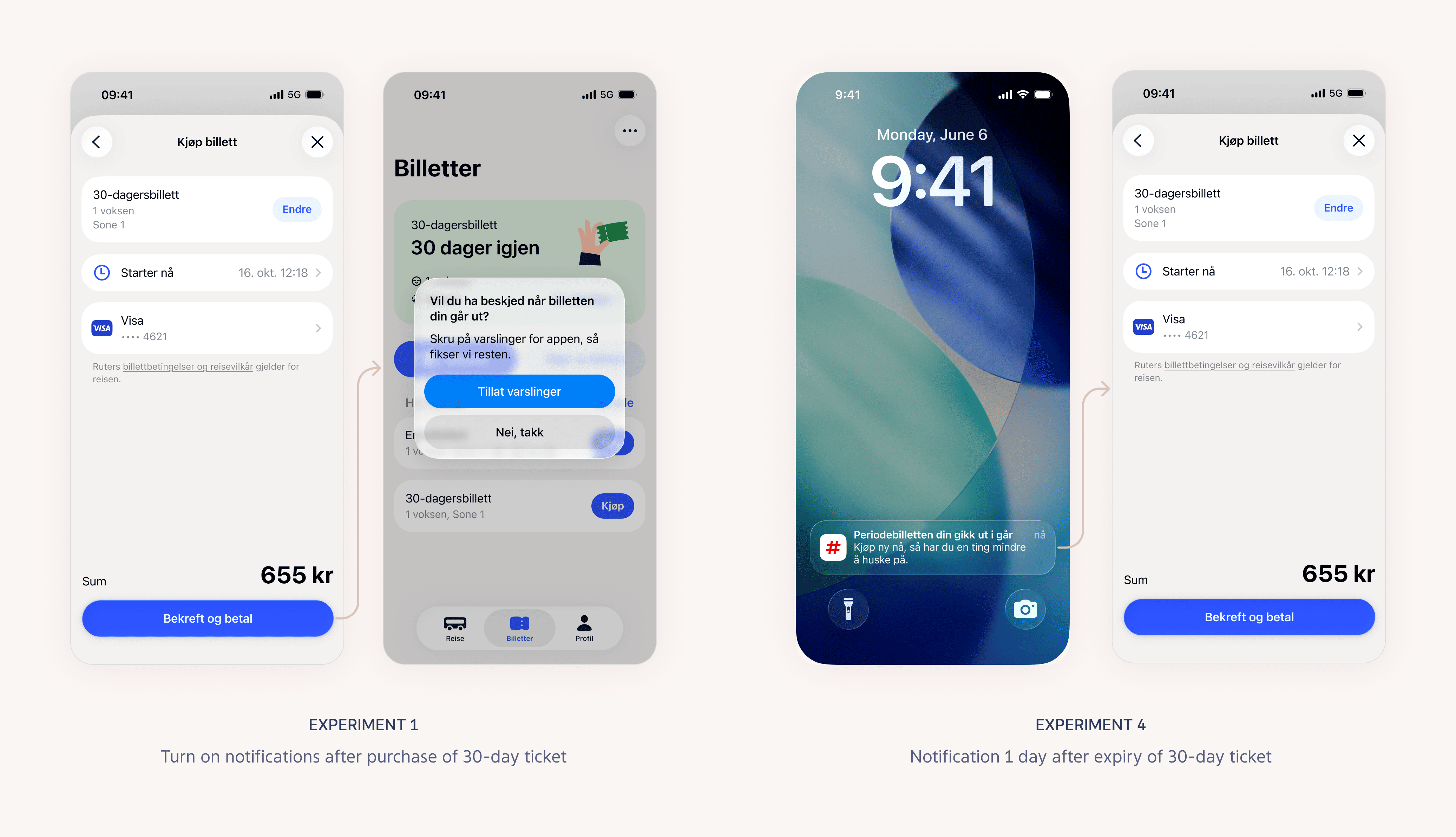
I was responsible for the design, and worked with the team to shape four experiments testing different ways of reminding users that their ticket had expired. Two of them exceeded our target results and were implemented as new features in the app.
Exploring the future of ticketing
Based on pain points from research across public transport authorities, as well as ongoing feedback from customers, a new strategic direction was taking shape for ticketing to make better use of the digital landscape we find ourselves in. In these early stages, I helped facilitate internal workshops to explore what this might look like. We developed a range of high-level concepts and prepared them for validation with real customers, to help inform the direction and shape of the strategy.